

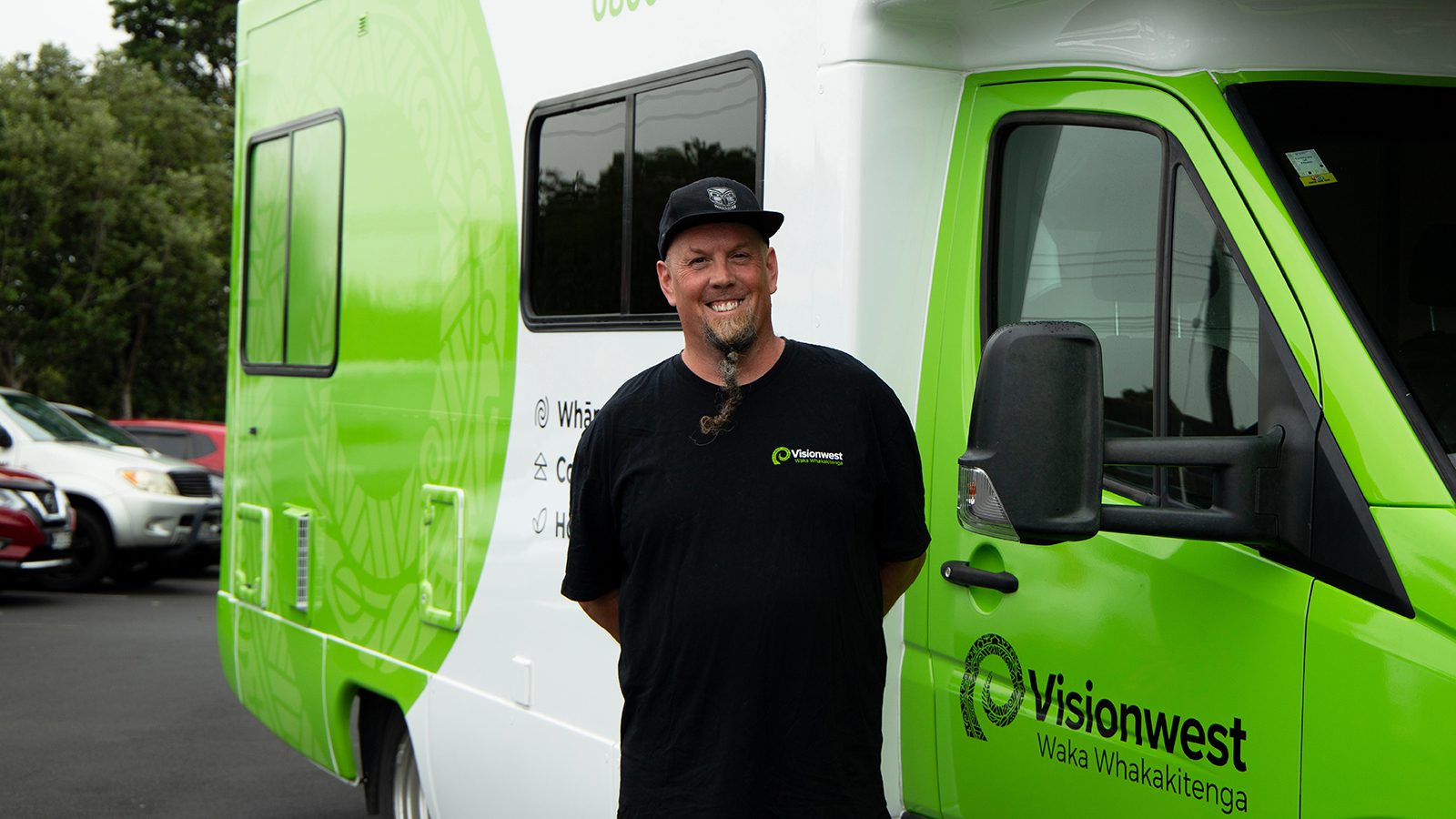
At Visionwest Waka Whakakitenga we are strategically expanding our work to address homelessness. A growing team. A freshly wrapped RV. Our Communications Manager, Dale Campbell, recently had a catch up with the Outreach Team Leader, Jeremy Nicholls, to have a chat about what’s informing our decisions.
Dale: Kia ora Jeremy, thanks for your time. Some big changes recently for the Outreach Team. What’s going on?
Jeremy: Kia ora Dale. Well, homelessness is on the rise. The amount of people sleeping rough has doubled in the last year, so our work to help must grow as well. Our care for whānau sleeping rough demands that we do what we can to help.
Why do we have a new, freshly wrapped RV, and what will your growing team be doing with it?
The RV is going to be such a great asset for our work with whānau sleeping rough. On the one hand, RVs like this are fitted with great storage capacity for items we want to have available. On the other hand, a branded vehicle like this creates a very visible pop-up space that carries our heart and vision to invite whānau into.
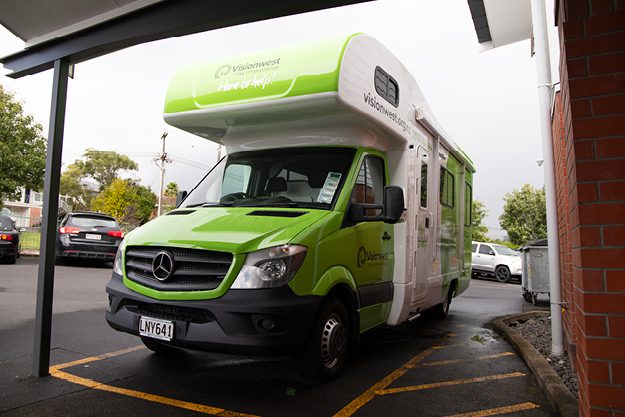
The new Outreach RV
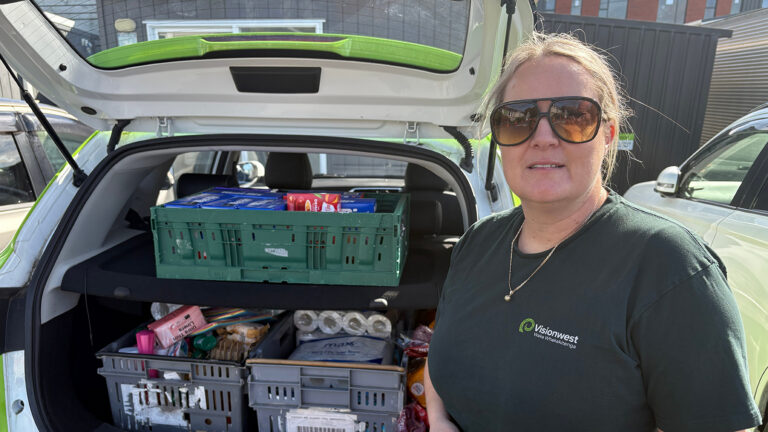
And yeah, I’m grateful to have a growing team. Their job is to get alongside whānau with practical care, conversation, and offer simple resources that make them feel seen and loved and offer some hope. Things like coffee, blankets, fresh socks, feminine products, powdered milk, and other food items. Treating them like humans.
Why is homelessness increasing, even in stereotypically wealthy areas of the city like the North Shore? And it’s affecting all kinds of people, isn’t it?
The government made what we might call a hard pivot to reduce the number of families in emergency housing. While it might be true that some have been able to find other forms of supported housing, the reality is that many have been left with no real option.
Boarding houses, a common option for single people, tend to be expensive and can vary greatly in quality. While some are well-run and organised, many are run-down and people feel unsafe in them. Behind the numbers are always real people in real situations.
I’m grateful to have a growing team. Their job is to get alongside whānau with practical care, conversation, and offer simple resources that make them feel seen and loved
And yes, you’re right; it affects all kinds of people. We’re seeing young people, men and women, and elderly folk sleeping rough. And not just in the stereotypically ‘poor’ areas of the city. Whānau sleeping rough often want to be near public amenities and places like shopping centres where they can access water and toilets.
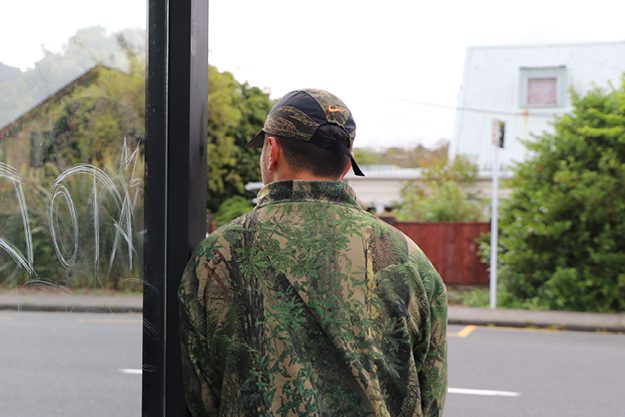
Hidden Homelessness
And there are also the ones that are easiest to not see – they are the hidden homeless who are sleeping in cars, garages or other forms of unsafe, crowded, cold or uninhabitable spaces. It’s a real problem that is not getting better.
So, it’s not been a popular policy change for sure. I’m guessing it would also be safe to say things weren’t perfect before the government made this move?
Of course not. There are no simple fixes to housing, especially in a city like Tāmaki Makaurau / Auckland. Sure, it was not ideal to use motels to house whānau for extended periods of time. On their own, those approaches are high on expense and low on helping whānau in their efforts to get into stable, secure long-term housing. Hotels weren’t the best. They were costly. People could be stuck there for a long time. But cutting that away without a positive alternative left whānau feeling like they were pushed onto the street.
How is the work of the Outreach Team linked to the wider strategy for Visionwest Community Housing?
We want to meet people where they’re at and see what the best pathway is for them. Our outreach team is often the first contact point for connecting whānau to our range of housing options. Our goal for all of our Community Housing initiatives is always to help whānau become self-supporting and give them the dignity of fully participating in their own journey.
Behind the numbers are always real people in real situations.
Like I say, there are no quick fixes, but we are committed to leaning in with practical care – both at the urgent short-term end of things, and the longer-term journey to safe, affordable and secure housing.
Many of us will see people sleeping rough as we go about the city. What can individuals, community groups, churches, or businesses do to help?
The main thing to avoid is doing nothing. It’s understandable to be uncertain or uninformed about how or when to get involved. Sadly, this uncertainty means we often disengage entirely. But there are heaps of ways to get involved, and at different levels.
We can speak up in support of approaches that work best for whānau on the margins. We can also continue to call on decision makers, community leaders and government for stronger action and better resourcing to meet increasing needs. You can volunteer to help organisations like us, or our friends at Orange Sky, The Salvation Army, or Lifewise to help with various activities. I’m pretty sure we all take donations too, which really helps obviously!
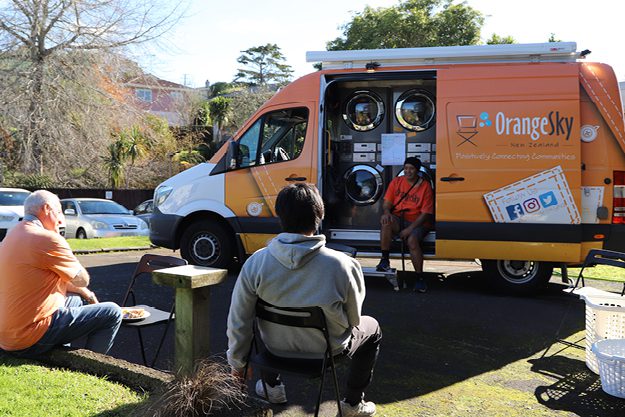
OrangeSky onsite at Visionwest Glendale Campus
Most of all, you can make eye contact with, and smile at people you see sleeping rough. You don’t have to feel compelled to give them money. Offer to buy them a pie or sandwich. Interact with them as human beings. Respect their boundaries, privacy, and dignity. Not every person sleeping rough will want to chat, but we can approach them, greet them, and learn their names.
Offer to buy them a pie or sandwich. Interact with them as human beings. Respect their boundaries, privacy, and dignity.
Even simple actions like that go a long way. Churches or community groups can invest in washing machines and set up rosters to wash clothes. Make your spaces a place where whānau feel welcome to come, charge their phone, have a cuppa, eat a meal, refill their drink bottle, and store their gear. Learn what they want before you assume.
***
Visionwest Waka Whakakitenga also assists whānau in times of hardship through the provision of support services that include navigational support, community housing, youth development programmes, counselling, financial mentoring, community healthcare, trauma informed care, and early childhood education. Please check out our website for more information.
It also takes a village to care for a community, and we love partnering with others to make a difference. We are grateful for our corporate and community partners who generously give time, funds and goods to support our work. If you would like to donate, volunteer or get involved to support this kaupapa, we’d love to hear from you.