

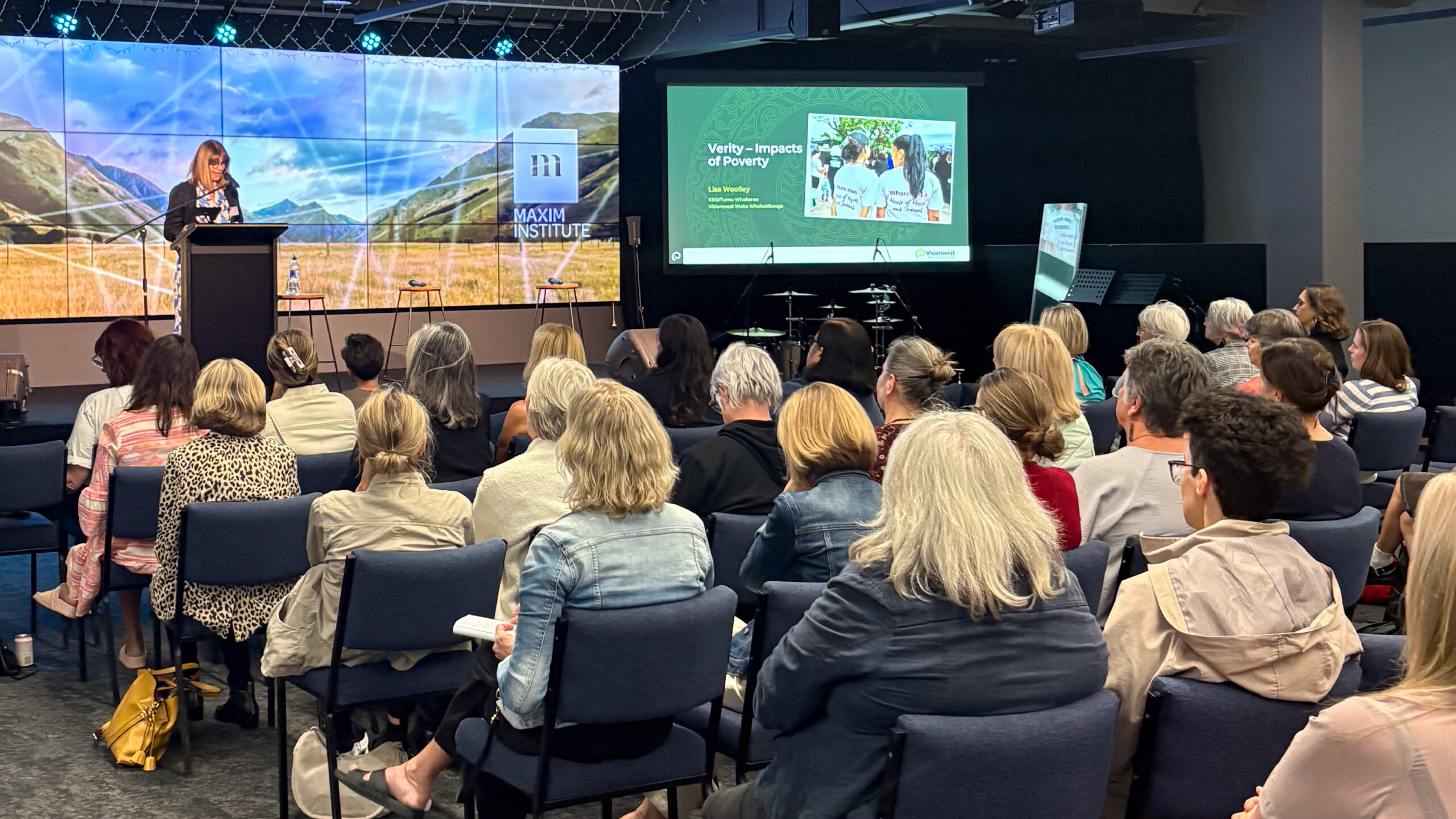
Last week, Maxim Institute held an event called ‘Verity – Women Shaping the Future’, which bought together a group of about 70 women to reflect on the impact of poverty on our communities in New Zealand. The Verity Group encourages women to gather on a regular basis to reflect on these issues that are facing New Zealand.
Lisa Woolley, CEO/Tumu Whakarae of Visionwest, was invited as a keynote and spoke with honesty and conviction about hardship, housing, and the role women play in driving meaningful social change.
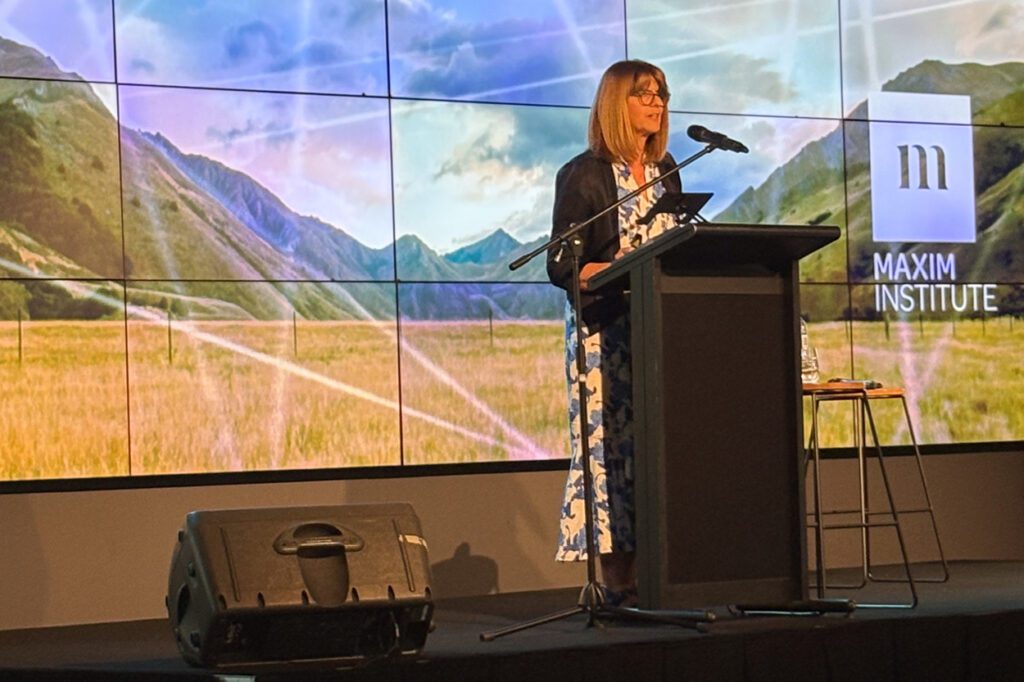
Lisa Woolley speaks at Maxim ‘Verity’ event
Lisa began by acknowledging the shared call many women feel to make a difference, highlighting the growing influence of Women’s Giving Circles such as Impact100. These models, she noted, demonstrate how collective generosity can unlock transformational outcomes. When women pool resources, knowledge, and intent, the impact extends far beyond what any individual could achieve.
Storytelling was central to Lisa’s kōrero. She shared experiences from her missionary work with her husband Mark in Hollywood, where they witnessed first-hand the realities faced by young girls caught in cycles of prostitution and addiction. These were not abstract social issues, but deeply human stories of people unable to break free without support. Responding to the call to walk alongside those impacted by violence, homelessness, addiction, and abuse quickly became a defining thread of Lisa and Mark’s lives.
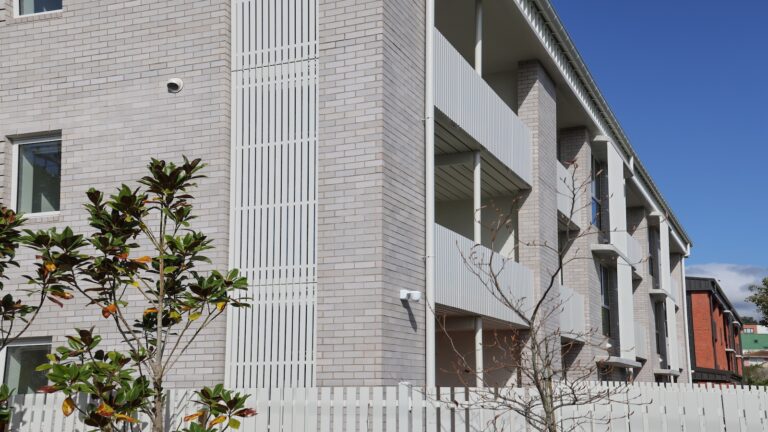
Through Visionwest, Lisa described how services grew beyond the bounds of the Church to meet wider community needs. Over time, one issue became impossible to ignore: housing. ‘Housing is a human right,’ Lisa affirmed, explaining how safe, stable housing underpins wellbeing, dignity, and opportunity.
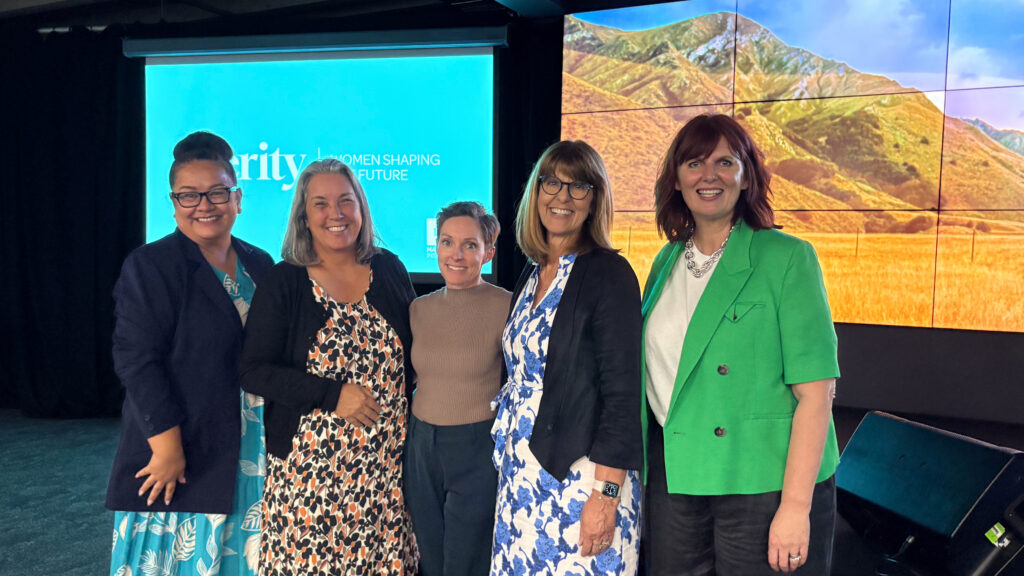
Left to Right: Pauline Fruean, Raewynne Jacobs, Marianne Spurdle (Maxim), Lisa Woolley, and Lou Bridges (Maxim)
Drawing on our Visionwest value statements, Lisa spoke about the importance of holding hope for people, even when they have lost hope for themselves. Support matters, especially when whānau are overwhelmed by poverty, trauma, and instability.
Lisa highlighted the transformational impact of the Housing First approach to homelessness, where people are housed quickly and provided with wraparound support tailored to their needs. Models like Housing First not only lift whānau out of poverty but create the conditions for generational change:
- Reconnection with family
- Improved health
- Renewed purpose
- Pathways into education and employment
Lisa’s message was clear: by addressing poverty and homelessness in practical, compassionate, and evidence-based ways, we can create hope that invokes intergenerational healing. There is no single solution, but through partnership, generosity, and shared commitment, cycles of poverty can be broken.
At Verity, Lisa reminded those gathered that collective action, grounded in hope, can change lives.